Ποιος χρονολόγησε Grace Elliott;
Γεώργιος Δ΄ του Ηνωμένου Βασιλείου dated Grace Elliott from ? until ?.
Arthur Annesley, 1st Earl of Mountnorris dated Grace Elliott from ? until ?.
George Cholmondeley, 1st Marquess of Cholmondeley dated Grace Elliott from ? until ?.
Λουδοβίκος Φίλιππος Β΄ της Ορλεάνης dated Grace Elliott from ? until ?.
Grace Elliott

Grace Dalrymple, Lady Elliott (* um 1754 in Edinburgh; † 16. Mai 1823 in Ville-d’Avray) war eine schottische Kurtisane, die in Paris Augenzeugin der Französischen Revolution wurde. Sie war die Mätresse des späteren Königs Georg IV. und des Herzogs von Orléans.
Διαβάστε περισσότερα...Γεώργιος Δ΄ του Ηνωμένου Βασιλείου
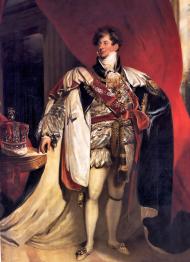
Ο Γεώργιος Δ΄ (George IV, 12 Αυγούστου 1762 - 26 Ιουνίου 1830) ήταν βασιλιάς του Ηνωμένου Βασιλείου, καθώς και του Αννοβέρου.
Διαβάστε περισσότερα...Grace Elliott
Arthur Annesley, 1st Earl of Mountnorris
Arthur Annesley, 1st Earl of Mountnorris FRS (7 August 1744 – 4 July 1816) was an Irish peer.
He was the son of Richard Annesley, 6th Earl of Anglesey, and Juliana Donovan, Countess of Anglesey, who belonged to the junior sept of the O'Donovans of Clan Loughlin, the Donovans of Ballymore in County Wexford. She was initially rumoured to be of lower birth, the ancient pedigrees of some Irish families not being widely known in the English-speaking world at that time, and hers deriving from a remote region of Ireland, the Barony of Carbery. Countess Juliana was the great-great-great-granddaughter of Donel Oge na Cartan O'Donovan, the 1st Lord of Clan Loughlin to hold his territories from the Crown, from 1616 (see surrender and regrant).
He succeeded to the title of 6th Baron Altham, of Altham, in County Cork, and to the title of 8th Viscount Valentia upon his father's death on 14 February 1761.
On 22 April 1771, the House of Lords decided that his claim to his father's English titles was not valid, and that therefore these titles had become extinct on his father's death in 1761. He was created 1st Earl of Mountnorris [Ireland] on 3 December 1793.
Διαβάστε περισσότερα...Grace Elliott
George Cholmondeley, 1st Marquess of Cholmondeley

George James Cholmondeley, 1st Marquess of Cholmondeley, ( CHUM-lee; 11 May 1749 – 10 April 1827), styled Viscount Malpas between 1764 and 1770 and known as the Earl of Cholmondeley between 1770 and 1815, was a British peer and politician.
Διαβάστε περισσότερα...Grace Elliott
Λουδοβίκος Φίλιππος Β΄ της Ορλεάνης
Louis Philippe II, Duke of Orléans (Louis Philippe Joseph; 13 April 1747 – 6 November 1793), was a French Prince of the Blood who supported the French Revolution.
Louis Philippe II was born at the Château de Saint-Cloud to Louis Philippe I, Duke of Chartres, and his wife, Louise Henriette de Bourbon-Conti. He was titled Duke of Montpensier at birth. When his grandfather Louis, Duke of Orléans, died in 1752, his father became the new Duke of Orléans and Louis Philippe II became Duke of Chartres. When his father died in 1785, he became Duke of Orléans and First Prince of the Blood. He was styled as Serene Highness (French: Son Altesse Sérénissime).
In 1792, during the Revolution, Louis Philippe changed his name to Philippe Égalité. He was a cousin of King Louis XVI and one of the wealthiest men in France. He actively supported the Revolution of 1789, and was a strong advocate for the elimination of the present absolute monarchy in favor of a constitutional monarchy. Égalité voted for the death of Louis XVI; however, he was himself guillotined in 1793 during the Reign of Terror. His son, also named Louis Philippe, became King of the French after the July Revolution of 1830. After Louis Philippe II, the term Orléanist came to be attached to the movement in France that favored a constitutional monarchy.
Διαβάστε περισσότερα...